February 2008
This year’s “Superbug” is called MRSA (pronounced “mers-uh”), a skin-eating virus that spreads quickly and is resistant to most antibiotics. The Center for Disease Control (CDC) reports that more people in the U.S. die of MRSA than from AIDS.
With the MRSA infections spreading quickly, tanning salons need to be absolutely sure their salon and everything in it is spotlessly clean. Doug Abodeely, President of Lucas Products, makers of LucasolTM Disinfectant Cleaner and Super Sunnies® Eye Shields, walks us through the steps to ensure protective eyewear really is clean.
“You’ll want to check that your sunbed cleaning solution and goggle cleaner kills on contact Staphylococcus Aureus (MRSA), the nation’s current No. 1 infection fear,” states Abodeely. “And, you need to use the products exactly as directed to be effective. That’s not ‘pour a little more cleaner in the container to freshen up the solution.’”
Abodeely says the biggest problem salon operators have with eyewear disinfection is improper mixing of the solution. “Most salon pros are unaware that the EPA (Environmental Protection Agency) requires solution used to clean sunbeds and eyewear to be mixed fresh on a daily basis to be most effective. Most disinfectant manufacturers offer specially marked measuring cups so you can mix only what you will need for that day.”
“Once the solution has been mixed exactly to manufacturer specifications, the next step in cleaning eye shields is often overlooked: removing all makeup and debris from the eye shield. Then, the eye shields and elastic bands, which can carry germs and dandruff, should be soaked in disinfectant for a minimum of 10 minutes. If goggles come with an elastic band, it must be provided to the tanner with the goggles, or the salon is in violation of their state health board rules. For the final step, the eyewear should be rinsed with fresh water to ensure that no cleaning fluid remains, which can irritate the eye. It’s important to dry goggles, as water attracts bacteria to the plastic.” Abodeely also suggests that goggles not be displayed in an open bowl or on a towel at the front counter. “Eye shields out in the open are going to pick up contaminants from the air. A typical sneeze spreads mucus particles eight feet! Goggles are really better kept in a Tupperware container and spread far enough apart so that a customer touches only their pair of eye protection. Make sure they know to only carry goggles by the elastic band or nose bridge; tanners often infect themselves by touching the lens portion with their own unsanitized hands.”
An important issue concerns mixing solution to manufacturer specifications. Remember that each manufacturer has a different requirement for proper solution mixture. Make sure that your morning salon staff has mixed solution correctly in a clean container, and checked its strength with a special quaternary strip; these are inexpensive and available from your distributor. Unfortunately, a common problem is that salon staff may not be as diligent as they should be about the 10-minute eyewear soak. During Busy Season, two disinfectant containers should be rotated so that tanners are not receiving goggles that were just added to the tank.
Read the labels that come with your sunbed cleaner and follow directions. Did you know that a lid should be kept on the cleaning solution container to keep ocular pathogens out? Did you know that gloves and safety glasses should be worn while mixing solution? Eye protection cleaner and bed cleaner are very powerful; they’re killing the HIV and flu viruses, as well as the MRSA Superbug. It’s best for salon operators to protect their eyes and skin while working with the full strength product. You’ll also want to use a tracking form that records who made the solution every day, and the Quat test strip test results. This info is critical for health inspector visits, says Phil Wilson, Oregon state salon inspector. “A salon clearly takes their sanitation seriously if they can point to a cleaning log,” states Wilson.
The Florida Department of Health warns salon owners against cleaning sunbeds and goggles with products that were not made for those purposes. “Alcohol is very hard on eyewear and sunbed acrylics. If your solution contains alcohol, it will cloud eye shield lenses and acrylics very quickly,” states Doug Abodeely.
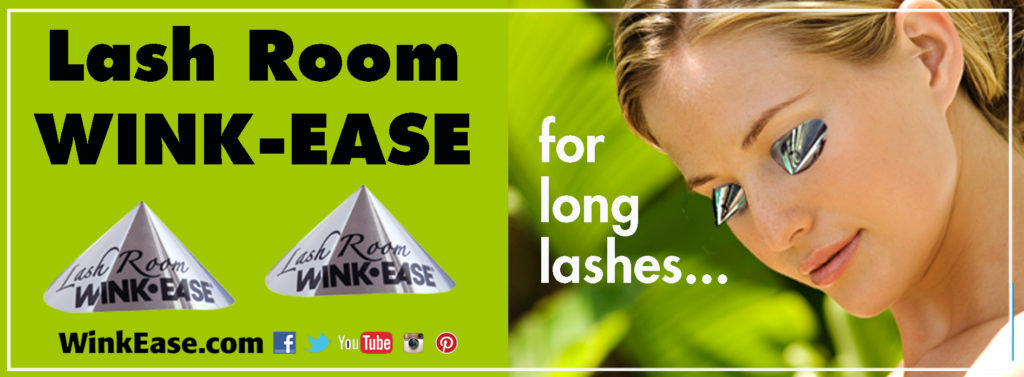
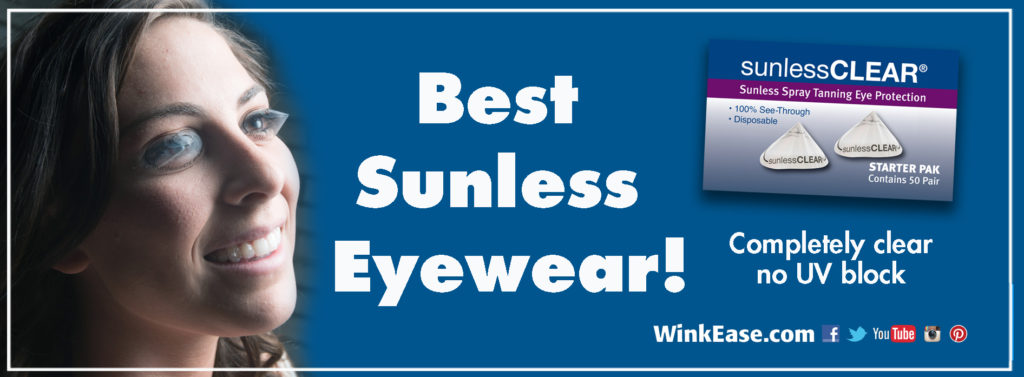
What about tanners who buy their own eyewear? “Only Texas and Ohio require salons to provide tanners with eye protection free of charge,” states Renee Lofland, Director of Customer Support at Eye Pro, makers of Wink-Ease® disposable eyewear. “All other states require salons to make eyewear available, but it doesn’t have to be free.” As for disposable eyewear, Lofl and points out that the product is only clean the first time a tanner wears it; after that, it’s less than pristine. She recommends single usage of disposable eye protection. “Disposable eyewear is licensed as a Class One Medical Product, just like tongue depressors and cotton balls. You wouldn’t want your doctor using your tongue depressor from last week on you again this week would you?” queries Lofland.
“If a tanner owns eyewear, we like to see it replaced if it has a rough surface or a deep gouge,” states Doug Abodeely. “Bacteria snuggles into cuts in the plastic and is very hard to clean.” He also recommends that tanners be offered re-sealable bags for carrying their goggles if the product does not come with a container. “We often hear of tanners using eyewear that’s been on the fl oor of their car or buried at the bottom of their purse,” Abodeely says. “By being so close to their eyes, this dirty eyewear exposes the tanner to all sorts of germs.”
So, is your salon squeaky clean? Check in next month when we’ll publish a quiz for you to test your staff…and yourself!
Download article